“Non-U.S. citizens are registered to vote in elections.”
This claim has been publicized notably by President Donald Trump.
According to the Associated Press, Trump spoke about a census report claiming thousands of non-U.S. citizens have voted in the 2020 election.
The following is a step-by-step guide on how to approach this claim.
Step 1. Evaluate how you feel about the claim
After reading a claim, look internally and ask yourself whether or not you feel skeptical. Some rumors spread more than others based on emotional response. The Nieman Lab has a comprehensive list of characteristics of a viral rumor.
President Trump is making a claim similar to previous ones about an illegitimate 2020 election leading to the victory for President Biden. This claim is significant, appeals to democracy, rule of law and fairness; and challenges the legitimacy of the institution of voting.
With these characteristics, this claim is worth evaluating.
Step 2. Look into who’s saying the claim
Who is making the claim? In this example, the claim is from President Trump who has a largely-known public history and reputation. In other instances, look at the author. Is the person making the claim, a politician, a business leader, a random person on social media? Then, look into their social media accounts or put their name in Google and evaluate the author’s history and credibility.
In this example, President Trump has made various false or misleading claims, according to the Washington Post, totaling 30,573 claims in 2021. A reasonable person would assume that this claim we are examining could be false and should not rely on this claim at face value.
Step 3. Look at the response
Look at the response about the claim on major news outlets and online. I use trusted news publications like the Associated Press, Reuters and Axios. Sometimes, these news publications do the work for you, providing additional evidence and context toward the claim. Nevertheless, it is integral in news reading to go across publications and media sources as to gain a bigger viewpoint about the issue and the claim.
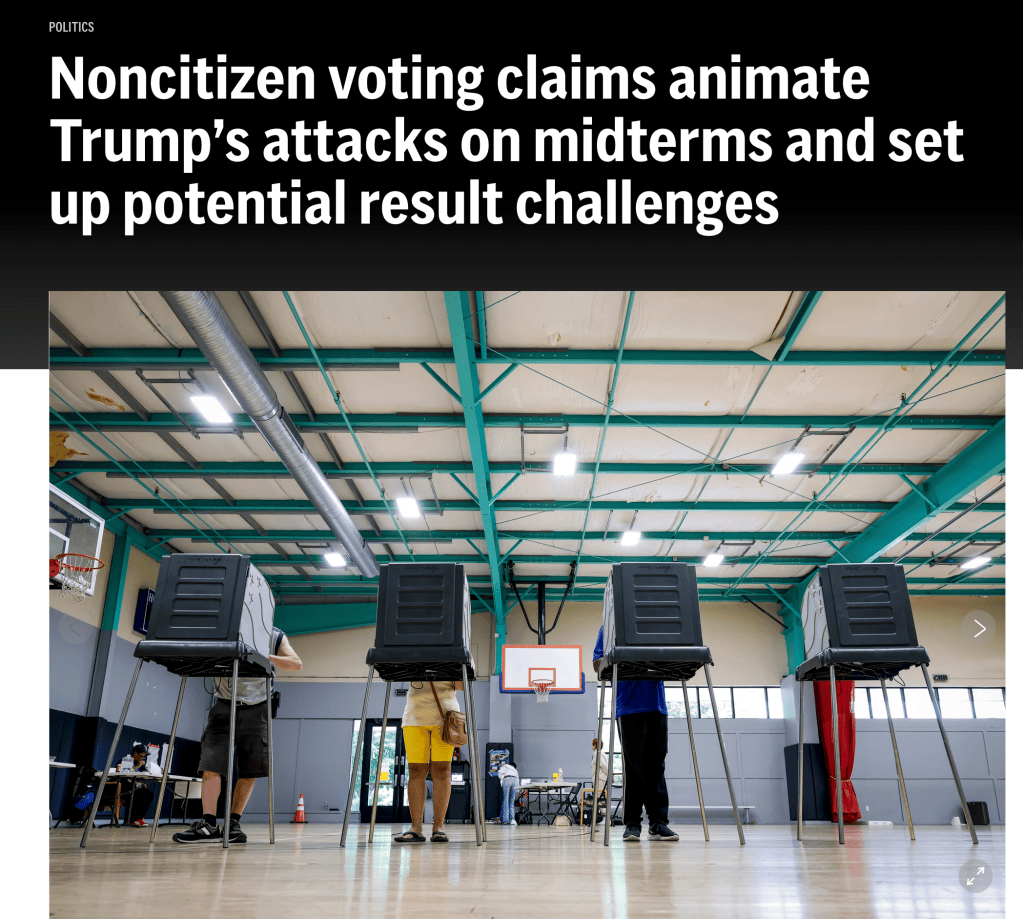
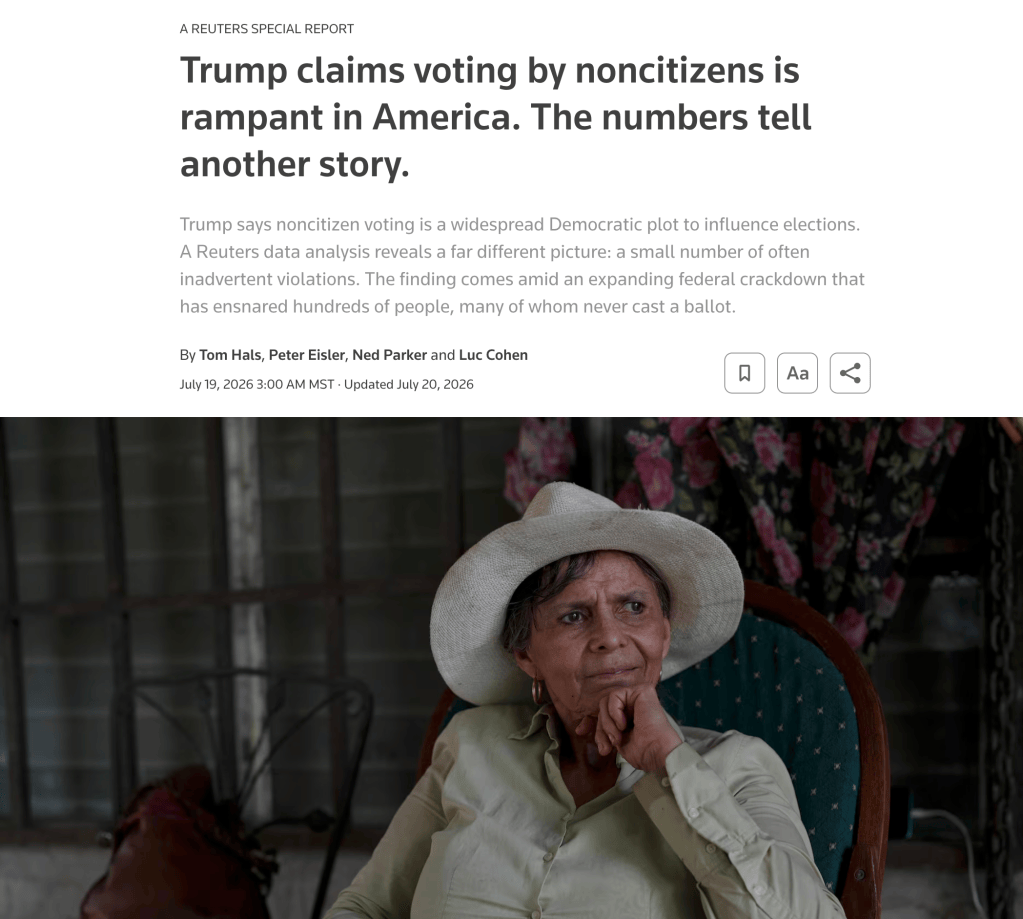
In this example, I look toward the Associated Press and Reuters over Trump’s noncitizen claims.
Step 4. Look for the source.
To make a claim, you must have compelling evidence and a logical warrant. So, look at the source and the evidence leading to the claim. Is it reliable? Is the data or context represented well? Is the claim aligned with the evidence?
In this example, Trump referenced a census report claiming thousands of non-U.S. citizens have voted in the 2020 election, making this finding a mandate for revising how we vote. Experts evaluated the report and found how the data was compared and the methodology was false, according to the Associated Press
This is false. The report says it checked data from a commercial voter file against federal records to identify noncitizens who allegedly voted in the election. According to experts, the methodology described in the report may have created false positives if, for example, an individual’s name was linked to the wrong address or their citizenship status hadn’t been updated in a certain database. Details about error rates and how the report ensured accurate results were not included.
We evaluated the source was unreliable.
Conclusion
The claim that noncitizens are registered to vote from President Trump is false because of the analysis of the evidence. Is it integral to fact check what we read and hear to ensure we are not unintentionally disseminating misleading or false information. Using this process in our routine consumption can thoroughly identify the legitimacy of claims.


Leave a Reply